
Keeping Pace with Innovations in Thermal Management Materials
Tecman's Technical Director on Integrating exciting materials from Battery Show Europe into advanced battery components
Joining the UK pavilion at the recent The Battery Show Europe enabled me to have some fantastic conversations with engineering and procurement teams racing to solve next-generation thermal management challenges.
Walking the show floor highlighted how rapidly material science is advancing to meet:
- Stricter safety standards
- Heightened performance
- Scalable manufacturing
The material innovations that caught my eye are key to bridging the gap between raw, cutting-edge science and production-ready thermal components. And they enable components to help OEMs comply with regulation updates such as the 2-hour no-flame and no explosion mandate in China's GB 38031-2025, and the forthcoming escalation of evidence required for UN R100's 5 minute thermal propagation delay.
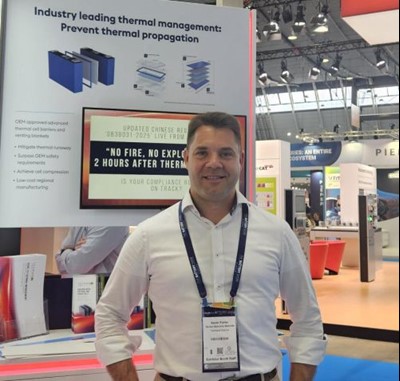
Author: Kevin Porter, Technical Director,
Tecman Advanced Material Engineers
Top Picks: Four Exciting Thermal Management Materials
Engineering effective components for battery packs depends on getting many variables right, and I think material selection is often at the very top of the list. Based on what I evaluated at the show, here are four of the standout materials I am now actively tracking:
1. Combined hollow fibre ceramic and
aerogel matrices
A blend of two extremely high-performance thermal insulators designed to stop thermal runaway propagation in it's tracks. Beyond its raw thermal performance, it promises an ultra-thin profile that is more cost-effective and significantly easier to handle during manufacturing than traditional alternative materials.
2. Thermally conductive dielectric
insulation films
A perfect convergence of localised heat dissipation and robust high-voltage isolation. They serve as a thermal sponge, soaking up intense hot spots and spreading the heat laterally across cooling plate surfaces. Unlike brittle legacy insulators, its high thermoformability enables intricate 3D moulding, which opens up a range of applications.
3. Thermal-Responsive Coatings
A very exciting technology that can smother out fires and transform battery safety. Rather than insulating the substrate or slowing down the fire, these coatings actively fight flames at a chemical and physical level. While it represents a major safety transformation, it is currently in the early stages of commercial development.
4. Microporous Insulation Panels
A compressed mix of fine silica and ceramic binding fibers that is a veteran of heavy industrial high-heat applications but is now being considered for automotive battery packs. Its thermal resistance is exceptionally high and it is inherently cost-effective. However, its fragility and tendency to shed fine, abrasive dust presents processing and handling challenges on high-speed automated lines unless properly encapsulated.
The Gaps in Thermal Management Materials That Need to be Closed
Engineers tackling thermal challenges have a growing range of materials to call upon. However, my experience in developing and collaborating with OEMs has shown there are still specific gaps where the industry is in need of more innovation, such as:
-

1. Insulation materials with optimised mechanical resistance
Extraordinary insulation materials are already deployed in thermal management components, and a lack of mechanical resistance can be compensated for with frames and other solutions. However, more cost-effective alternatives with mechanical resistance that can be optimised to requirements would greatly help to streamline cost and simplify component assembly.
-

2. Combined thermal shielding & Dielectric resistant materials
While Mica remains the default choice for fire protection, it adds significant hidden integration costs. The raw mineral flakes are very affordable, but mica's extreme brittleness introduces processing and structural lamination costs. An alternative that can be cleanly cut and handled without fracturing would drastically reduce total BOM costs.
-

3. Ultra-thin and lightweight materials
Much progress has been made in delivering materials with remarkable ratios of weight and thickness to insulation performance, but even small space savings can still be transformative and would improve safety while providing battery engineers with further flexibility, and opportunities to boost performance and extend EV driving range.
Integrating Innovative Materials into Your Battery Components
Discovering innovative materials on a trade show floor is one thing; processing them in an assembly line and integrating them into cost-effective, production-ready components is another.
As advanced material engineers and converters, we collaborate with OEMs and Tier 1 suppliers to bridge this exact gap, taking raw substrates and transforming them into production-ready, die-cut functional components at scale.
Using our multi-layer lamination capabilities, we combine materials into single, ultra-thin components that achieve multiple functions at once. Combined with our other capabilities, such as advanced die-cutting, we deliver industry-leading battery components for our customers, such as OEM approved thermal runaway barriers. These barriers provide extreme insulation and can simultaneously manage cell compression forces and provide EMI shielding. Low-cost manufacturing of these barriers is achieved through our all-in-one regional production lines.

How to Integrate Innovative Materials Whilst Controlling Costs
In practice, the adoption of cutting-edge performance materials nearly always has to be balanced with commercial objectives and constraints. To enable us to leverage the most advanced materials while ensuring cost-effectiveness, I recommend the following:
1. Introduce Target Costing Early
Optimising around a realistic target cost during the concept phase can often accelerate material selection and sometimes is the catalyst for innovative approaches and ideas to be developed.
2. Leap-Frog R&D with Proven Cross-Sector Materials
As a manufacturer serving multiple industries, we’ve witnessed the benefits of utilising proven materials from other sectors. This involves routinely using high-performance, cost-effective materials that are proven in one industry and adapting them to solve challenges in others.
3. Optimise Components for your battery pack
We believe that gaining an in-depth understanding of your battery pack architecture and thermal management system is essential. It allows engineers to build insights into the designs and optimise solutions, such as thermal runaway barriers and venting blankets, to achieve specific goals and remove unnecessary features and cost.
4. Combine Materials strategically
Integrating premium materials with cost-effective ones can create multi-functional components that are able to serve several purposes, such as advanced thermal cell barriers that isolate thermal runaway and manage cell compression.
Partner with Tecman and Convert Advanced Materials into
Cost-Effective Functional Components
Keeping pace with the rapidly evolving material landscape requires constant vigilance and deep manufacturing expertise. As the regulatory landscape for EVs tightens globally with the enforcement of GB 38031-2025 in China and forthcoming changes to UN R100 Series 05 in Europe, the ability to successfully integrate the most suitable materials into compliant, cost-effective components is critical.
Tecman supports OEMs and Tier 1 suppliers with an in-depth understanding of material science and proven expertise in transforming materials into production-ready thermal management solutions.
Contact our technical team today to find out how we can collaborate with your engineering team to guide your material selection and manufacture high-performance components tailored for your battery pack.
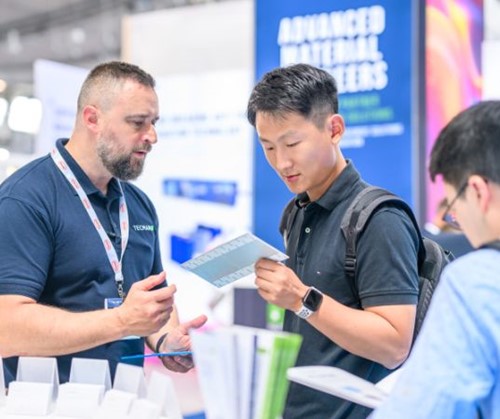
Advanced Thermal Management Solutions for Battery Development

Preventing Propagation in a Thermal Runaway event
Thermal cell barriers are critical to preventing heat propagation during a thermal runaway event. Wh…
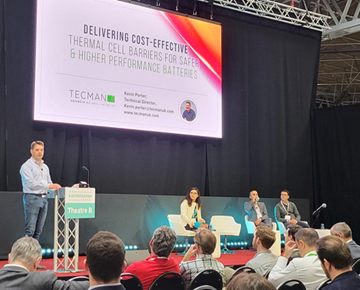
Key insights from our thermal management conference session
6 key insights from our conference session at Battery Cells & Systems Expo, titled 'Delivering Cost-…
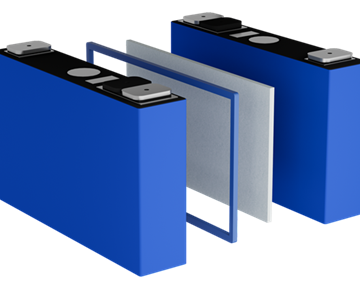
Case Study: Advanced Thermal Cell Barrier for EV Battery Packs
A concept-to-manufacture solution for a major automotive OEM to delay thermal propagation in EV batt…

Case Study: Precise PET Die-Cuts for Automated Assembly Success
We supported on a critical battery pack component project involving the high-speed automated applica…